Saqib K
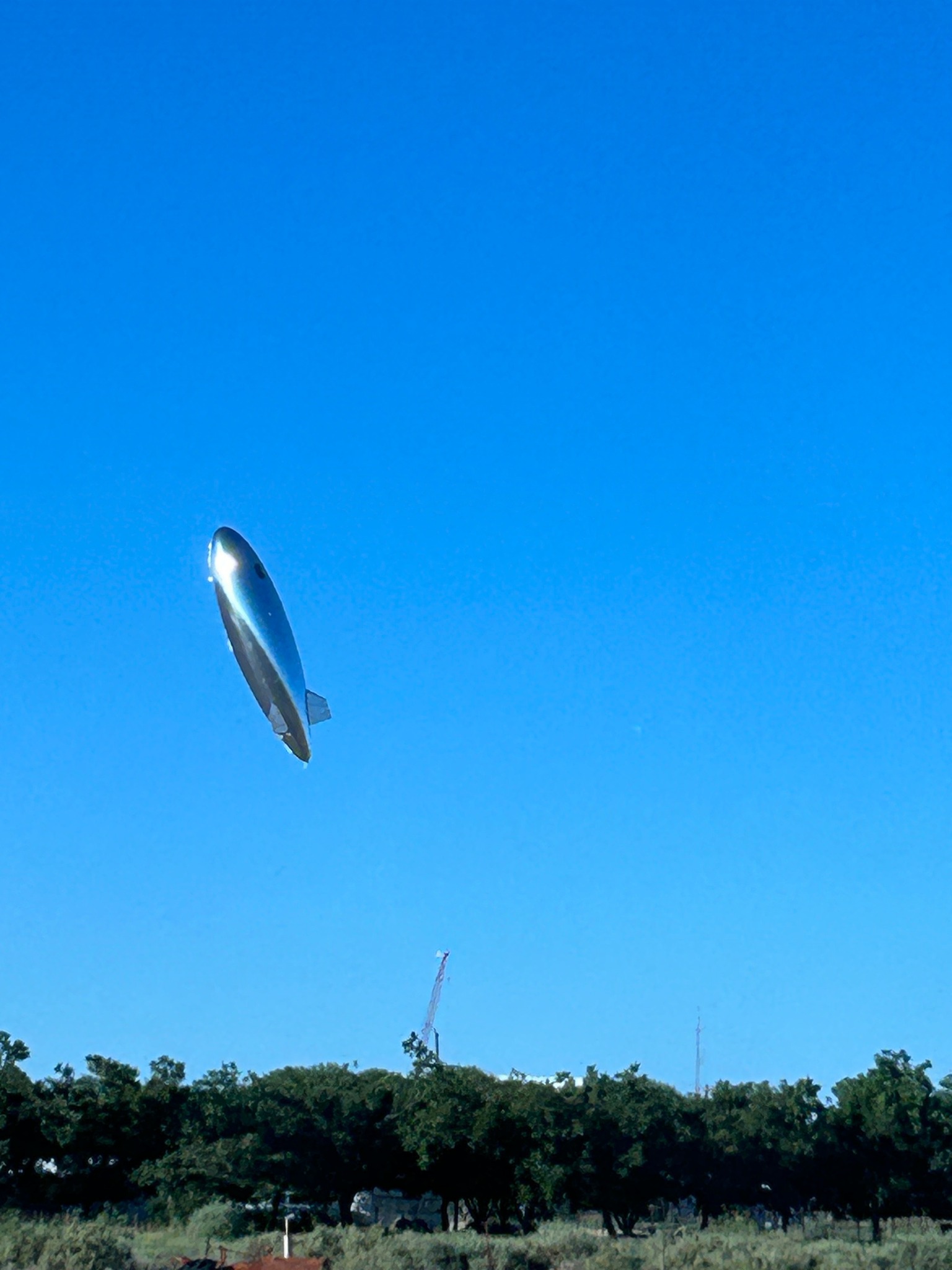
Sceye HAPS Specs: Payload, Endurance, And Breakthroughs In Battery Technology
1. Specifications provide you with the details of what the Platform Will Actually Do
There's a tendency in the HAPS industry to talk about ambitions instead of engineering. Press releases explain coverage areas such as partnership agreements, coverage areas, and commercial timelines. But the more challenging and more interesting discussion is about specifications, how much the vehicle actually weighs as well as how long it stays on the road, and what energy systems make continuous operation possible. For anyone trying figure out whether a stratospheric vehicle is truly mission-capable, or even being developed in a promising prototype, the payload capacity, endurance numbers and battery efficiency are where the substance lives. It is easy to make vague commitments to "long endurance" and "significant payload" are a given. Delivering both simultaneously, at an altitude of above is the technical challenge that differentiates credible programs from bold announcements.
2. Lighter than Air Architecture Modifies the Payload Equation
The key reason that Sceye's design can support a significant payload is buoyancy takes care of the fundamental task of keeping the airship in motion. This is not an insignificant difference. Fixed-wing solar aircrafts must generate aerodynamic lift indefinitely, which consumes energy and has structural constraints which restrict the amount of mass the vehicle can sensibly be able to carry. Airships floating at equilibrium in the stratosphere doesn't spend energy fighting gravity the same way, which means the power produced by the solar array and the structural capacity of the vehicle, can be directed toward stationary keeping, propulsion and the operation of the payload. It's the result of the capacity of payloads that fixed-wing HAPS designs in the same durability really struggle to match.
3. Capacity for Payloads Determines Mission Versatility
The true significance of higher capacity for payloads becomes apparent once you consider what soaring objectives actually require. The payload of telecommunications — antenna systems, signal processing hardware, beamforming equipment — has an actual weight and volume. So does a greenhouse gas monitoring suite. Additionally, there is a wildfire detection or Earth observation. To run one of these missions efficiently requires hardware that is mass. It is necessary to perform multiple missions at the same time more. Sceye's airship requirements are formulated with the idea that a stratospheric structure should be capable of carrying a beneficial combination of payloads instead than making operators choose between observation and connectivity as the vehicle doesn't have enough space to accommodate both simultaneously.
4. Endurance is where Stratospheric Missions are Winners or losers
A platform that reaches an altitude of more than up to 48 hours prior to needing to make a descent is useful for demonstrating. Platforms that remain in place for weeks or months at during the course of developing commercial services. The distinction between those two outcomes is almost entirely the energy aspect — specifically, whether or not the vehicle is able to generate sufficient solar power during daylight hours to run all its devices and recharge its batteries to keep full function through the night. Sceye endurance goals are based on this challenge during the day with the idea of treating energy availability for overnight use not as a goal to be achieved but as a basic requirements for design that everything else needs to be crafted around.
5. The Lithium Sulfur Battery is a Real Step of Change
The chemistry of the battery that powers conventional electronic devices and electric vehicles — primarily lithium-ion — has energy density characteristics that result in real difficulties for stratospheric endurance. Each kilogram of battery mass carried up is a kilogram that's not used for payload, yet you'll need a sufficient amount of stored energy to keep an enormous platform operating in a stratospheric night. Lithium-sulfur chemistry changes this trade-off dramatically. With energy densities that can reach 425 Wh/kg, lithium-sulfur batteries can store significantly more energy per pound than similar lithium-ion devices. In a vehicle which is weight-constrained, every one gram of battery weight has potential costs in payload capacity enhancement in energy density isn't small, it's significant.
6. The latest advances in solar cell efficiency are the other half of the Energy story
The energy density of the battery determines the amount of power you can save. The efficiency of solar cells determines the speed at which you can replenish it. Both are important, and advancement on one without advancing one leads to a split energy architecture. New developments in high-efficiency solar cells such as multi-junction models that are able to capture a larger range of solar energy than conventional silicon cells have significantly improved the energy harvest available to HAPS powered solar vehicles during daylight hours. Together with lithium-sulfur storage these advances are what make a true closed power loop possible: creating and storing enough energy daily that all systems can be operated without external energy input.
7. Station Keeping draws continuously from the Energy Budget
It's easy to see endurance as merely staying in a high place, but for the stratospheric spacecraft, remaining in air is only one component of the energy equation. station keeping — continuously maintaining its position against the prevailing winds by continuous propulsion draws power continuously and comprises an important portion of the total energy use. The energy budget must keep station keeping with payload operations, avionics, communications, and thermal management systems at the same time. This is the reason why specifications with endurance numbers without describing the specific systems operating during the duration are hard to evaluate. The true endurance figures are based on full operational load, not only a basicly designed vehicle with load-shedding shut off.
8. The Diurnal Cycle Is the Constrained Design Parameter that Everything Else flows from
Stratospheric engineers speak about the diurnal cyclic — the daily rhythm that determines the amount of solar energy available -as the primary constraint on which platform architecture is constructed. In daylight the solar array should provide sufficient power to run all the systems and recharge the batteries with enough capacity. The batteries must be able to last until sunrise, and without being moved, affecting efficiency of the payload, or being in any mode of reduced capacity that might disrupt a constant monitoring or communication mission. A vehicle that can thread the needle in a consistent manner every day of the week, over months is the main engineering challenge for solar-powered HAPS development. Every decision in the specification including solar array size the chemistry of batteries, propulsion efficiency, power draw to the payload -all are a result of this single rule of thumb.
9. This is because the New Mexico Development Environment Suits This Kind of Engineering
In the process of developing and testing a stratospheric airship requires infrastructure, airspace and conditions in the atmosphere that aren't easily accessible in all. Sceye's base in New Mexico provides high-altitude launch and recovery capabilities, clean skies to conduct solar tests, plus access kind of prolonged, uninterrupted airspace ongoing flight testing requires. There are many aerospace firms in New Mexico, Sceye occupies a distinctive position — specifically focused on stratospheric lighterthan-air systems instead of the rocket launch programmes more commonly found in the area. The engineering rigour required for the verification of endurance claims and battery performance under real stratospheric conditions is precisely the type of work that is a benefit from a specialised test facility rather than random flight events elsewhere.
10. specifications that are able to withstand Tests Are What Commercial Partners Are Looking For.
In the end what makes specifications matter beyond technical interest is that the commercial partners making investment decisions must ensure that the numbers actually exist. SoftBank's pledge to establish a nationwide HAPS networks in Japan with a focus on pre-commercial services by 2026, is based on the trust that Sceye's platforms will perform as described in operating conditions — not just in controlled tests, but through the entire duration of a mission that commercial networks need. Payload capacity that is able to stand up with a complete telecommunications and observation suites on board and endurance data that is verified by real-world operations, and battery performance demonstrated across real daily cycles are what make a promising aerospace program into an infrastructure that a major telecoms operator is willing to stake its network plans on. Read the most popular sceye greenhouse gas monitoring for site examples including Solar-powered HAPS, Station keeping, Sceye News, sceye haps project status, Real-time methane monitoring, aerospace companies in new mexico, Sceye Softbank, aerospace companies in new mexico, space- high altitude balloon stratospheric balloon haps, Diurnal flight explained and more.

Mikkel Vestergaard's Vision Behind Sceye's Aerospace Mission
1. Founding Vision is an underrated Factor on Aerospace Company Outcomes
The aerospace business produces two broad categories of company. The first is built around technologies looking for potential applications — a capability in engineering in search of a marketplace. The second one starts with a issue that is important and then works toward the technology to address it. The distinction might seem abstract until you look at what each kind of company actually constructs on, the partnerships it chooses to pursue and how it decisions when resources are limited. Sceye falls clearly into the second category, and knowing that orientation is important in understanding the reasons why the company has made the unique engineering decisions it has based on — lighter-than-air design, multi-mission payloads that emphasize endurance, and an initial basis that is located in New Mexico rather than the areas of aerospace clusters along the coast that attract large numbers of venture-backed space corporations.
2. The Issue Vestergaard began to address was bigger Than Connectivity
Most HAPS firms base their initial stories in telecommunications. connecting gaps, inaccessible billions, the financial benefits of reaching people in remote areas without any infrastructure that is terrestrial. These are very real and crucial issues, but they're commercial problems that require solutions. Mikkel Vestergaard's starting point was different. His experience in applying sophisticated technology to tackle environmental and humanitarian issues resulted in a guiding principle at Sceye which views connectivity as an outflow of stratospheric technology instead of its primary purpose. Monitoring greenhouse gas levels in addition to disaster detection, Earth observation monitoring for oil pollution and natural resource management were all part of Sceye's mission from the beginning. Not attributes added later to create a telecommunications-related platform that is more socially aware.
3. The Multi-Mission Platform is a direct expression of that Vision
When you understand that the initial question was about how the stratospheric infrastructure could solve the world's most significant problem of connectivity and monitoring simultaneously, the multi-payload platform design is no longer a smart commercial approach and starts to appear as the most sensible answer to that question. Platforms that carry communications hardware, methane monitoring sensors and technology to detect wildfires isn't striving make itself available to everyone It's simply expressing the fact that all issues that require solving from the stratosphere are interconnected, and a platform capable of solving a variety of them at once is more compatible with the goals than a platform optimised for a single revenue stream.
4. New Mexico Was a Deliberate Option, Not an Accidental One
The Sceye's base the state of New Mexico reflects practical engineering specifications — airspace access to test conditions at atmospheric levels, the ability to fly at altitude — however it also suggests something about the brand's personality. The well-established aerospace industries of California and Texas are home to companies whose primary market is investors and defence contractors, as well as the media ecosystem that covers these areas. New Mexico offers something different in the way of the physical setting needed to carry out the work of designing and testing stratospheric lighter-than air technologies without the burden from being near to the media who write and fund aerospace. As one of the aerospace companies within New Mexico, Sceye has developed a programme of development that is built around engineering validation, rather than public narrative. A option that reflects a Founder who is who is more concerned about whether the platform actually performs rather than whether it produces spectacular announcement cycles.
5. It is a design priority to ensure that endurance Affirms a Long-Term Mission
Short-endurance HAPS platforms are intriguing demonstrations. Long-endurance platform are an infrastructure. The emphasis of Sceye ability to endure — building vehicles that can hold station for a period of months or weeks instead of days has been a result of a founder's realization that the issues worth addressing from the stratosphere won't solve them between flights. Monitoring for greenhouse gas emissions that lasts over a time period of one week and then is shut down, creates a records of no scientific or regulatory importance. Emergency detection that requires an infrastructure that can be moved in the event of a disaster and then relaunched is not a reliable early warning layer that emergency management professionals need. The endurance specifications are a declaration of what the need for the mission is not a metric of performance designed for its own purpose.
6. Humanitarian Lens Shapes Partnerships Humanitarian Lens Shapes Which Partnerships Should Be Prioritised
Each partnership may not be worthwhile, and the criteria used by companies to evaluate potential collaborators can reveal something important regarding its interests. Sceye's partnership with SoftBank on Japan's nationwide HAPS network — aiming for service offerings that are precommercial in 2026is noteworthy not only because of its commercial size, but for its alignment with the country that truly needs the benefits of stratospheric networks. Japan's seismic exposure, complicated geography, and national engagement in environmental surveillance make the ideal deployment environment where Sceye's multi-mission capabilities meet more than earning revenue in a space that already has sufficient alternatives. This alignment between commercial partnerships and mission-related goals is not by chance.
7. A decision to invest in Future Technologies Requires Conviction About the issue
Sceye is a startup company operating in a developing environment in which the technologies it relies on such as lithium-sulfur battery at 425 Wh/kg energy densities, high-efficiency solar cells for stratospheric aviation, and advanced beamforming technologies for stratospheric telecoms antennas — are at the edge of what's currently achievable. Business plans based on technologies which are advancing but not yet mature requires a founding team with the necessary understanding of the significance of the issue to justify the risk of a timeline. Vestergaard's conviction that stratospheric infrastructure will soon become a permanent element of global connectivity and monitoring is the basis for investing in future technologies which will not reach their full operational potential until the platform which they facilitate is in operation commercially.
8. The Environmental Monitoring Mission Has Become More Important Since its Inception
One of the advantages of founding a company around an actual problem instead of being a technological trend of the moment is that the issue gets more then less important over time. When Sceye was created, it was evident that the need to continue monitoring of greenhouse gases at the stratosphere such as wildfire detection warnings of climate disasters was convincing in the sense of. In the intervening years the founding, the increasing frequency of wildfires, growing scrutiny of methane emissions within international climate frameworks and the inadequacy demonstrated by existing monitoring infrastructure have all bolstered that argument to a large extent. The initial vision doesn't have for revision in order to stay useful, as the world has shifted towards it.
9. The Careers at Sceye demonstrate an understanding of the Breadth of the Mission
The variety of disciplines required to develop and manage stratospheric platform for multi-mission usage is wider than most aerospace-related programmes. Sceye careers cover material engineering, atmospheric science technology for power systems, telecommunications remotely sensing software design as well as regulatory matters — the cross-disciplinary nature of Sceye's profile reflects the breadth of what the platform was designed to do. Companies that are founded on a single-use technology are more likely to recruit within the specific discipline of the technology. The companies are based on a need that requires a variety of converging technologies to address the issue of hiring across the boundaries of these disciplines. The character of talent Sceye recruits and creates can be seen as a reflection of our visionary founder's goals.
10. The Vision is Successful Because it's Specific about the issue The Vision is not about the solution.
The most lasting visions for founding in tech companies are precise on the problem they're working to solve and flexible about the methods used. The vision of Vestergaard — persistent stratospheric technology for monitoring connectivity, and environmental monitoring is precise enough to provide clear engineering requirements and clear partnership standards, however, it's flexible enough accommodate the evolution of technological advancements that enable. As the battery's chemistry improves and solar cell efficiency grows and HIBS standards are refined, and as the regulatory environment for stratospheric operations evolves, Sceye's mission continues to be the same. its method of executing that mission can incorporate the best available technology at each stage. This framework — anchored on the problem, adaptive on the solution — is the reason why the aerospace mission has continuity across a development time line measured in years rather than cycle of products. Take a look at the most popular Stratospheric infrastructure for blog recommendations including what's the haps, Sustainable aerospace innovation, softbank group satellite communication investments, softbank group satellite communication investments, softbank haps pre-commercial services japan 2026, softbank haps pre-commercial services 2026 japan, sceye haps softbank partnership details, Stratospheric broadband, sceye haps airship status 2025 2026, Sceye stratospheric platforms and more.